
Following severe storm activity in North Brisbane, TDR was engaged to manage a complex water damage and mould remediation project. Rainwater had penetrated the property windows, leading to severe saturation and secondary mould propagation across the lower sections of the upstairs walls, as well as the ceilings of the lower level. TDR was tasked with stabilising the environment, protecting salvageable assets, and restoring the structural framing to a verifiably safe state.
The initial phase of the project required a meticulous contents remediation strategy. The TDR team systematically collected all affected soft contents, including linen, clothing, blankets, and curtains, for specialised cleaning. Non-salvageable materials were documented and safely disposed of, while all salvageable items were cleaned, treated, and packed for secure storage to prevent cross-contamination during the upcoming structural works.
Once the structural strip-out was underway, the true complexity of the claim became apparent. With the wall cavities exposed, the team revealed extensive mould growth deeply embedded within the timber framing.
The property featured highly intricate construction with tight cracks, crevices, and hard-to-reach cavities. Relying on traditional manual cleaning methods would have been highly inefficient. It would have added hundreds of hours of manual labour to the project, significantly extending the claim lifecycle and driving up temporary accommodation costs for the insurer.
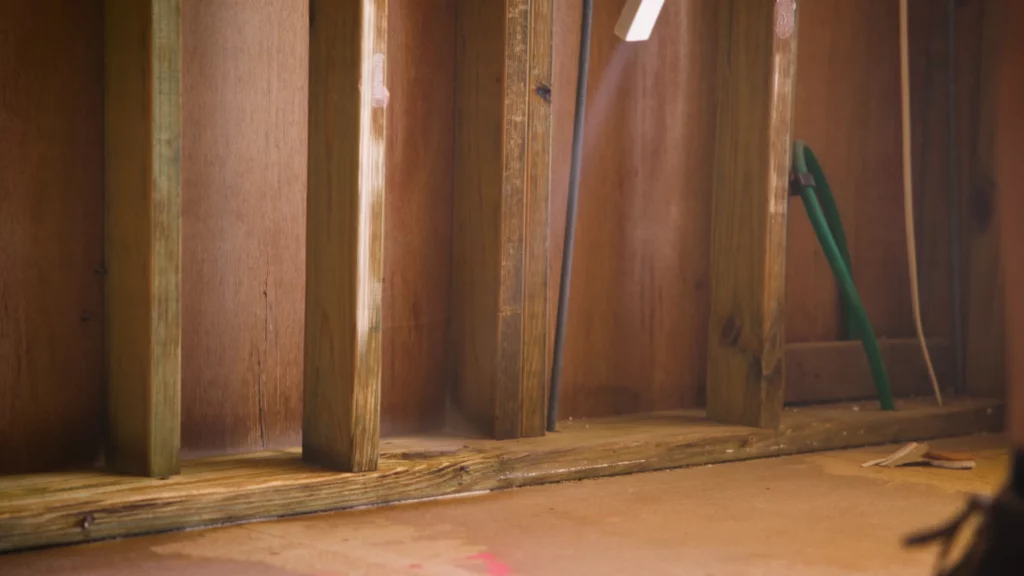
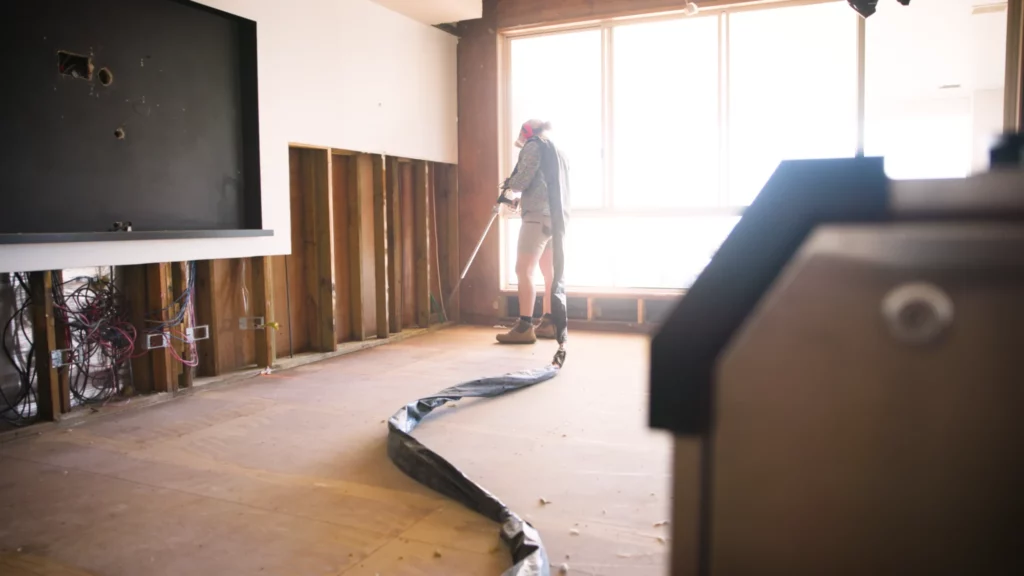
Advanced remediation technologies like dry ice blasting are not deployed on every project. When a property is still intact, it’s impossible to accurately assess whether the framing requires this level of intervention. However, once the framing was exposed, TDR conducted a cost-benefit analysis for the loss adjuster.
Dry ice blasting utilises pelletised dry ice accelerated through a specialised nozzle at near-supersonic speeds. Upon impact, the extreme cold creates a thermal shock that causes the mould to embrittle, shrink, and crack away from the timber substrate. As the pellets instantly sublimate from a solid to a gas, they expand up to 800 times in volume, creating micro-explosions that lift the contaminants away while the kinetic energy safely flushes the debris out of the wood cavities without damaging the underlying timber.
While the daily equipment cost for dry ice blasting is higher than standard manual tools, its operational advantages are unmatched:

The application of dry ice blasting on this North Brisbane project delivered exceptional results. Because the architectural design made manual detailing impractical, the kinetic and thermodynamic properties of the dry ice blasting process easily navigated the structural intricacies of the building.
By choosing an advanced technical solution, TDR achieved a verifiably safe and clean site, eliminating hundreds of labour hours from the scope of works, preventing cost creep and reducing the total indemnity spend on the claim. The property was successfully restored to IICRC standards, allowing for a seamless, rapid handover to the insurance builders.